
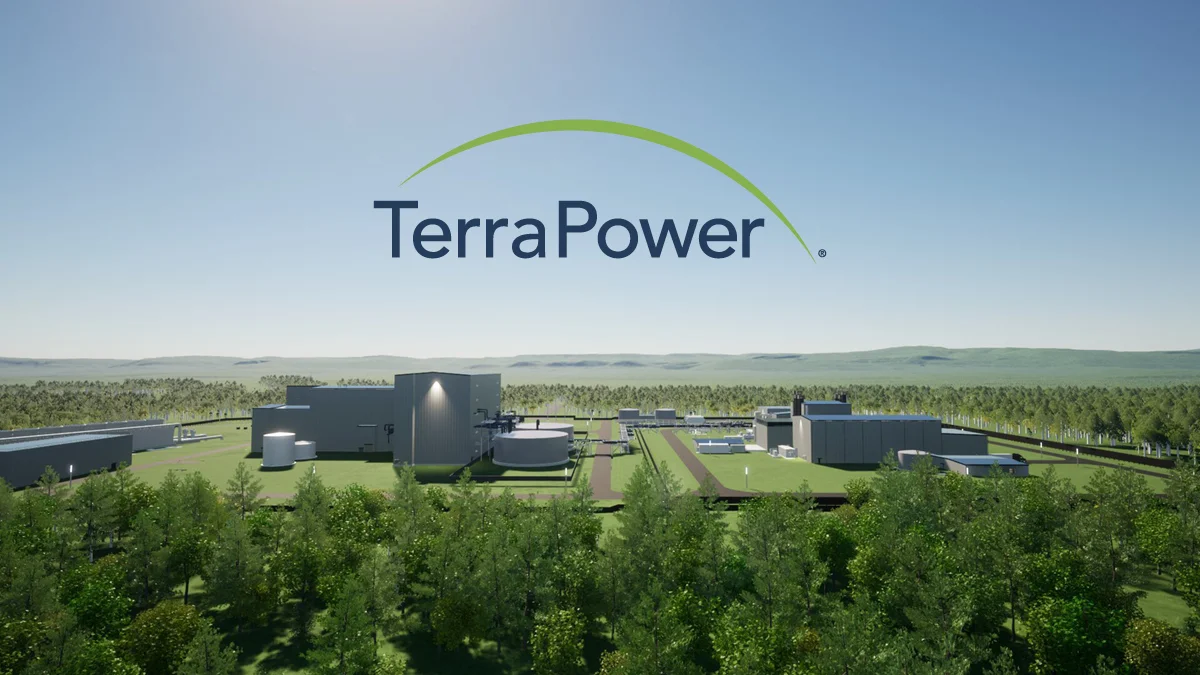
TerraPower’s Nuclear Reactor Has a Secret Weapon for AI Data Centers
Nuclear power startups are pitching themselves as the solution to AI’s massive energy problem. TerraPower, founded by Bill Gates, has a unique advantage. And it’s all about energy storage.
Let me break down what they’re doing.
The Announcement
TerraPower plans to announce its first data center project this year. The project is expected to break ground in 2027. It would be the company’s second power plant, with the first already under construction in Wyoming.
TerraPower didn’t say who the customer will be. But in January, they announced that Meta had agreed to buy eight of its Natrium power plants.
The Problem With Nuclear
Here’s the thing about nuclear reactors. They work best when they’re running at full tilt. Nuclear reactors have the highest capacity factor of any power source. In the US, they generate at maximum power 92.5% of the time.
But they’re slow to ramp up and down. Existing reactors can only increase or decrease about 5% of their total output per minute. New small modular reactors (SMRs) can react faster, about 10% per minute.
But running at reduced capacity isn’t ideal. It’s hard to make money when you’re not generating electrons. And nuclear has the highest capital expenditures of any generating technology.
The Data Center Challenge
Data centers are a difficult customer. Their loads can sink and soar quickly as GPUs respond to tasks. The swings are so demanding that natural gas turbines have been breaking under the stress.
To smooth the curve, data centers need large banks of batteries. That increases costs further.
TerraPower’s Solution: Energy Storage
This is where TerraPower’s secret weapon comes in.
TerraPower designed its 345-megawatt molten salt-cooled reactor to work around these challenges. The key consideration was ensuring the reactor could complement intermittent sources of electricity like wind and solar.
Here’s how it works. To ramp quickly, TerraPower doesn’t increase or decrease the power output of its reactor. Instead, it keeps splitting atoms, and the extra heat gets stored in a giant vat of molten sodium.
When power demand spikes, the power plant can tap that reservoir to generate more steam to spin the turbines. The expensive equipment keeps working even when demand is low, allowing the company to amortize its investment over more operational hours.
The Advantage
The approach takes the best of nuclear power (high capacity factor) and pairs it with energy storage. That allows TerraPower to play nicely on a renewable-heavy grid or when connected to a data center.
It’s a flexible approach that could give the startup an advantage in the race to power AI.
The Bottom Line
TerraPower is building nuclear reactors with built-in energy storage. They keep the reactor running at full power and store the excess heat in molten sodium. When power demand spikes, they tap that storage.
This solves the data center problem. The reactor can respond quickly without ramping up or down.